







By Debbie Bunch
September 22, 2025
Emphysema is More Than Just an Incidental Finding on LDCT
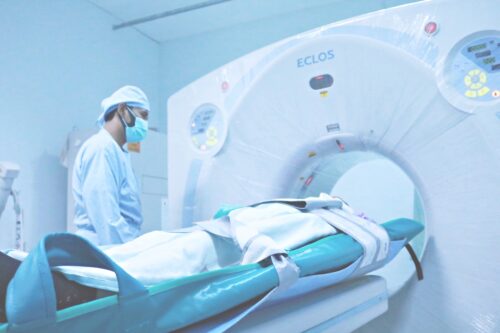
According to an international group of investigators, an incidental finding of emphysema on the initial CT scan for smokers at risk for lung cancer has significant prognostic value.
The study involved 9,047 asymptomatic adults in New York State who were between the ages of 40 and 85 when they underwent baseline low-dose chest CT (LDCT) screening between 2000 and 2008. The participants were then followed for up to 25 years. Specific findings included:
- 70.9% had no evidence of emphysema on the baseline LDCT.
- Mild emphysema was seen in 21.1%, moderate emphysema in 5.7%, and severe emphysema in 2.4%.
- Nearly 80% of the participants identified with emphysema on their baseline LDCT had not been previously diagnosed, including 5% with moderate or severe emphysema.
- Slightly more men than women were diagnosed with emphysema, 30.1% vs. 28.2%.
- Evidence of the disease increased with advanced age and higher cumulative smoking exposure.
- By the end of 2024, 3,738 participants, or 41.3%, had died, 12.7% from cardiovascular disease, and 3.3% from COPD.
- The median age at the time of death from all causes was 81, with the median age at the time of death for those who died from COPD, cardiovascular disease, and other causes coming in at 81, 82, and 81 years, respectively.
- A statistical analysis of associations between emphysema and mortality demonstrated that the lung disease was associated with COPD mortality but not cardiovascular disease mortality.
“The findings show an increased risk of all causes of death by the presence of emphysema and its severity, ranging from a 1.15-fold increase for mild disease and a 2.28-fold increase for severe emphysema,” said study author Claudia I. Henschke, MD, PhD, from the Icahn School of Medicine at Mount Sinai in New York.
She went on to note that for deaths due to COPD, the increased risk for those with emphysema ranged from a 2.07-fold higher risk for mild disease to a 12.06-fold higher risk for severe disease.
Dr. Henschke and her colleagues believe these findings call for risk-based treatment to prevent or slow the progression of emphysema in patients who show signs of the condition on LDCT screening. The study was published in Radiology.
Read Press Release Read Full Paper

Basophils May Hold the Key to ARDS Treatment
Despite advances in critical care, the mortality rate for patients with the acute respiratory distress syndrome (ARDS) remains high, and no dedicated treatments exist.
Researchers from Science Tokyo believe they may have discovered a possible therapeutic pathway. In a study conducted in a mouse model of ARDS, they found that basophils, a rare type of white blood cell that plays a key role in allergic reactions, helped to resolve lung inflammation.
The findings support earlier work showing an association between low basophil counts and severe respiratory failure in conditions ranging from sepsis to COVID-19. Basophils have also been shown to help resolve skin inflammation and bacterial infections.
In this study, the researchers induced ARDS in mice, then compared outcomes among mice that lacked basophils and mice that had normal levels. Similar symptoms were seen in the two groups during the early inflammatory stage of the disease. Still, the mice with basophils fared much better during the recovery phase, with less lung tissue damage and inflammation, and lower numbers of neutrophils, white blood cells that respond first to infection.
From there, the investigators performed single-cell RNA sequencing to determine the cause of these results. That testing showed basophils were a significant source of interleukin-4 (IL-4), a signaling molecule that helps immune cells coordinate their responses.
When the researchers deleted IL-4 or genetically modified basophils so that they could not produce IL-4, mice showed more lung damage and fluid buildup during recovery. Further analysis revealed that IL-4 acts on neutrophils to switch off genes that drive inflammation and prevent cell death. With IL-4 out of the picture, neutrophils live longer, remain highly inflammatory, and delay lung recovery.
The authors believe if the source of IL-4 in human ARDS can be discovered, targeting the basophil-IL-4-neutrophil pathway could offer a new therapeutic approach to ARDS.
The study was published in the European Respiratory Journal.
Read Press Release Read Full Paper

Put Away the Stethoscope?
Researchers from Rutgers Robert Wood Johnson Medical School have found that patients presenting to the hospital with undifferentiated dyspnea who are examined using point-of-care ultrasonography (POCUS) end up staying in the hospital for fewer days than similar patients who are initially analyzed using a stethoscope.
The study involved 208 patients who were admitted to Robert Wood Johnson University Hospital in New Brunswick, complaining of shortness of breath. About half were diagnosed using POCUS devices that attach to smartphone,s while the remainder were diagnosed via existing standards of care.
The lung ultrasound used in the study was purposefully kept simple, comprising only a few cardiac views and a six-zone lung sweep, to make it easy to perform and interpret in 10 to 15 minutes. While participating hospitalists were trained on the use of the device, most of them let sonographers perform the exams and cardiologists interpret them. A hospitalist made an ultrasound diagnosis in only 20% of patients.
This teamwork approach resulted in an average drop in hospital stay from 11.9 days to 8.3 days for patients who underwent POCUS, and the investigators estimated that initial diagnosis with ultrasound saved 246 bed-days and about $751,000 in direct costs.
Ultrasound findings altered medical decisions in roughly a third of cases, as well, including new diagnoses and changes in therapy. Patients who had longer hospital stays appeared to benefit the most from the technology, suggesting ultrasound-guided triage and treatment may particularly benefit more complex cases.
No differences in 30-day readmissions were seen between the patients who were and were not diagnosed via POCUS.
“The explanation here is simple,” said study author Partho Sengupta. “Ultrasound gives you more information, and more concrete information, about what’s going on. When clinicians can see fluid in the lungs, a failing heart, or a stiff inferior vena cava in minutes, they can target therapy sooner or rule out a cardiopulmonary cause and look elsewhere.”
JAMA Network Open published the study.
Read Press Release Read Full Paper